Your mate in workout activity
MoveMate app. IOS, Android. 2025
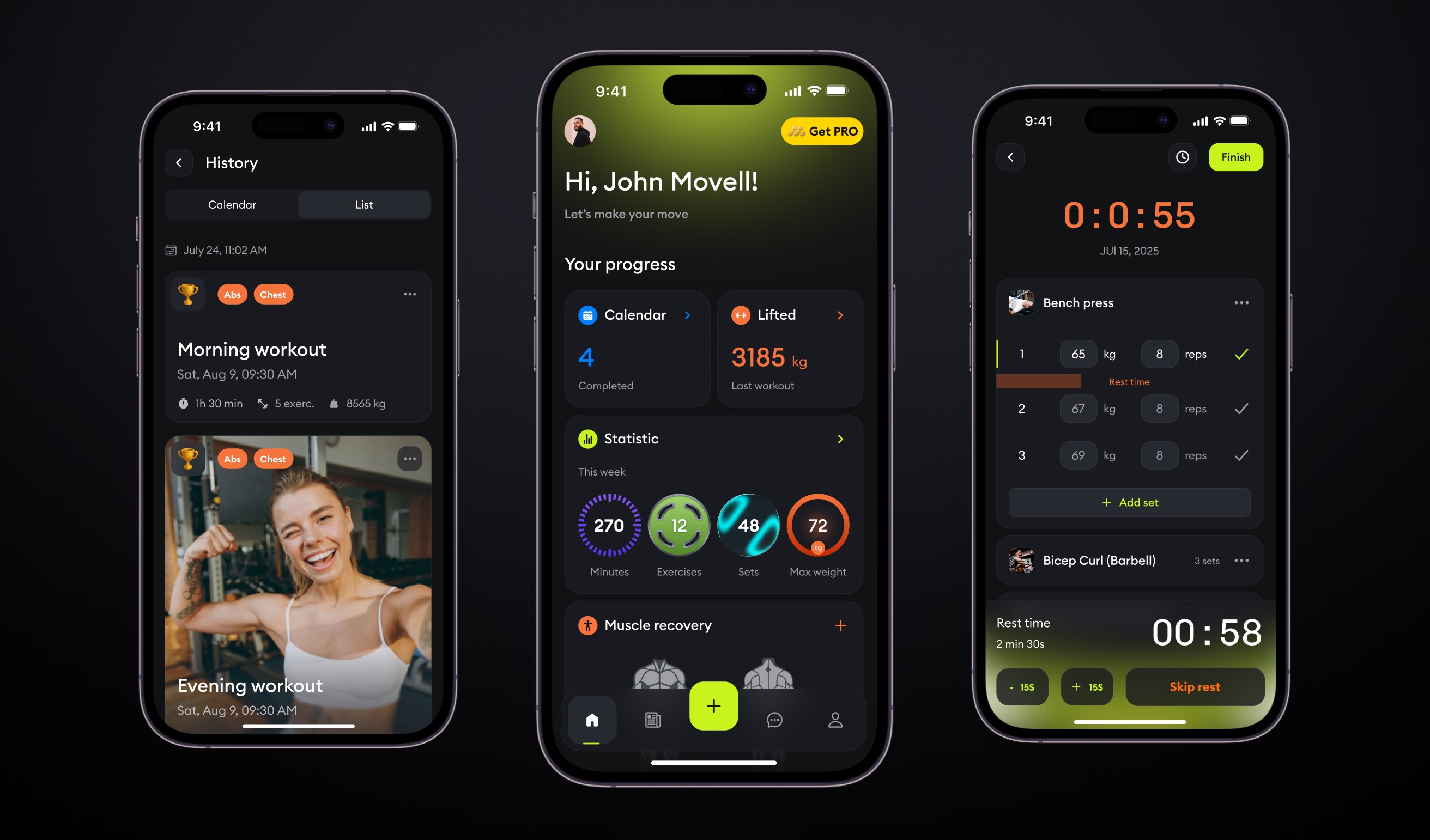
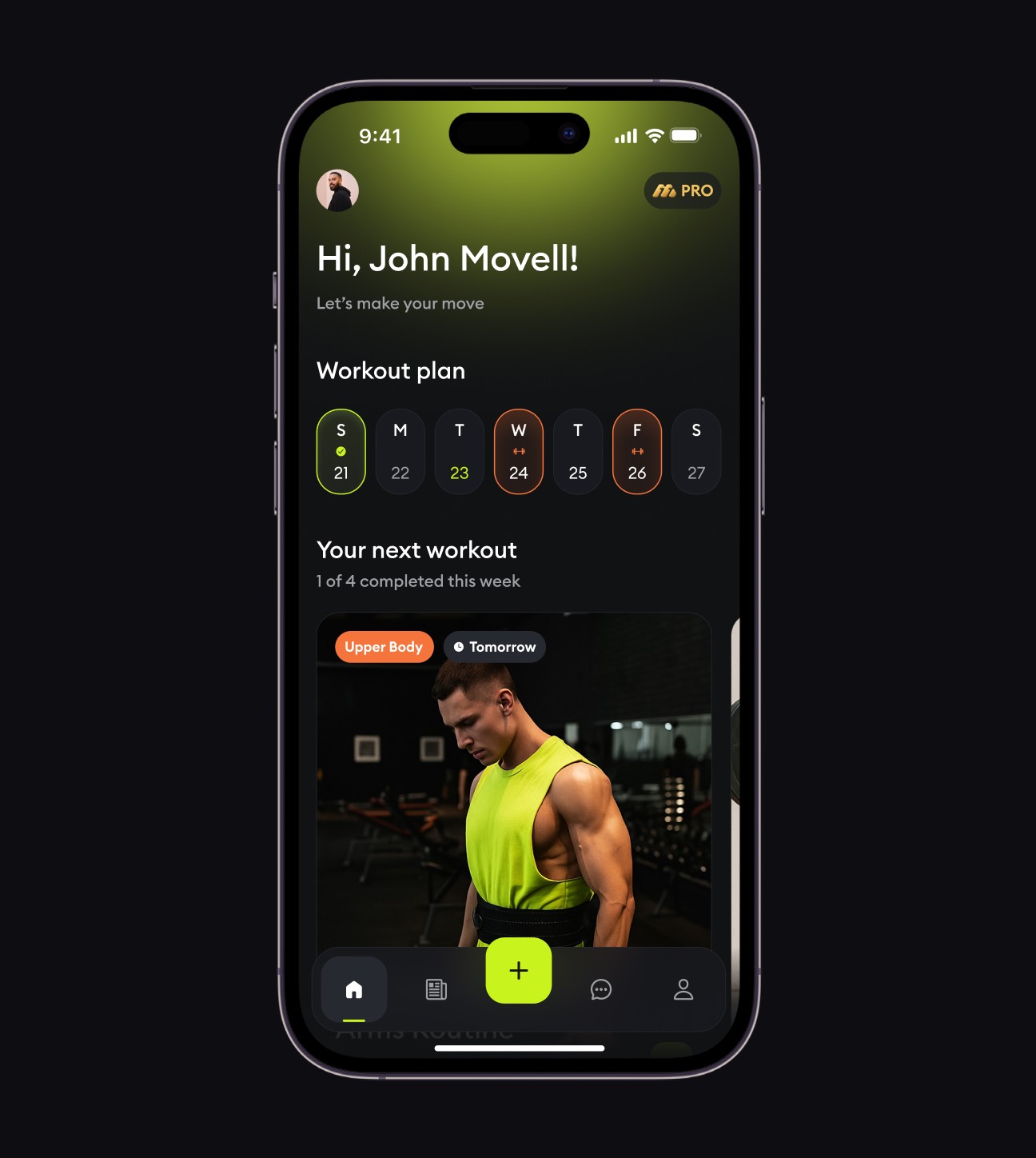
MoveMate is a fitness app with a large workout library allowing users to build personalized workouts, stay motivated, and track their fitness progress. The mission is to make fitness simple, motivating, and accessible for everyone.
Timeline
9 months
Role
Branding, Design, Research, Prototyping, Testing
Team
Me, 2 developers and product analytic.
Start moving
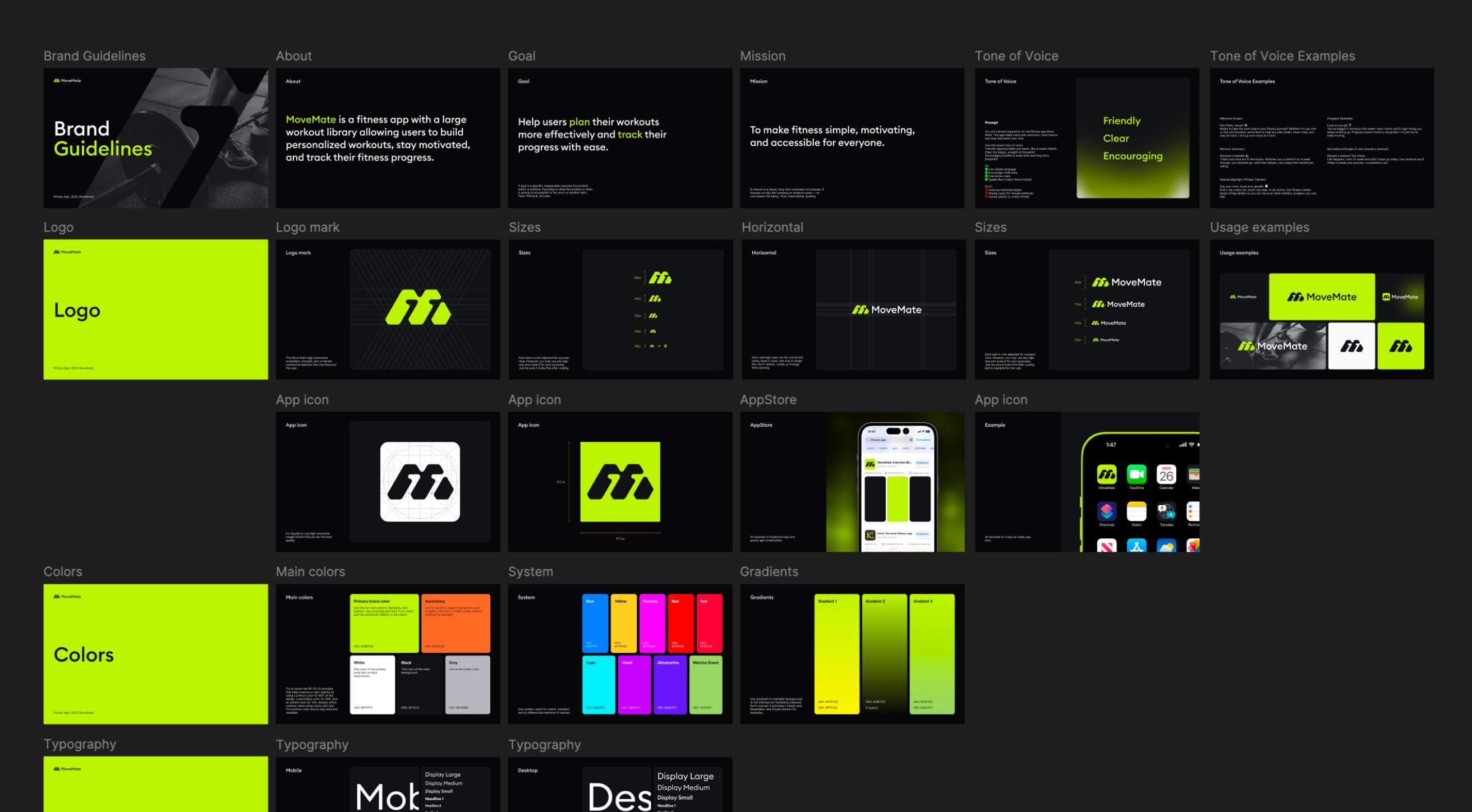
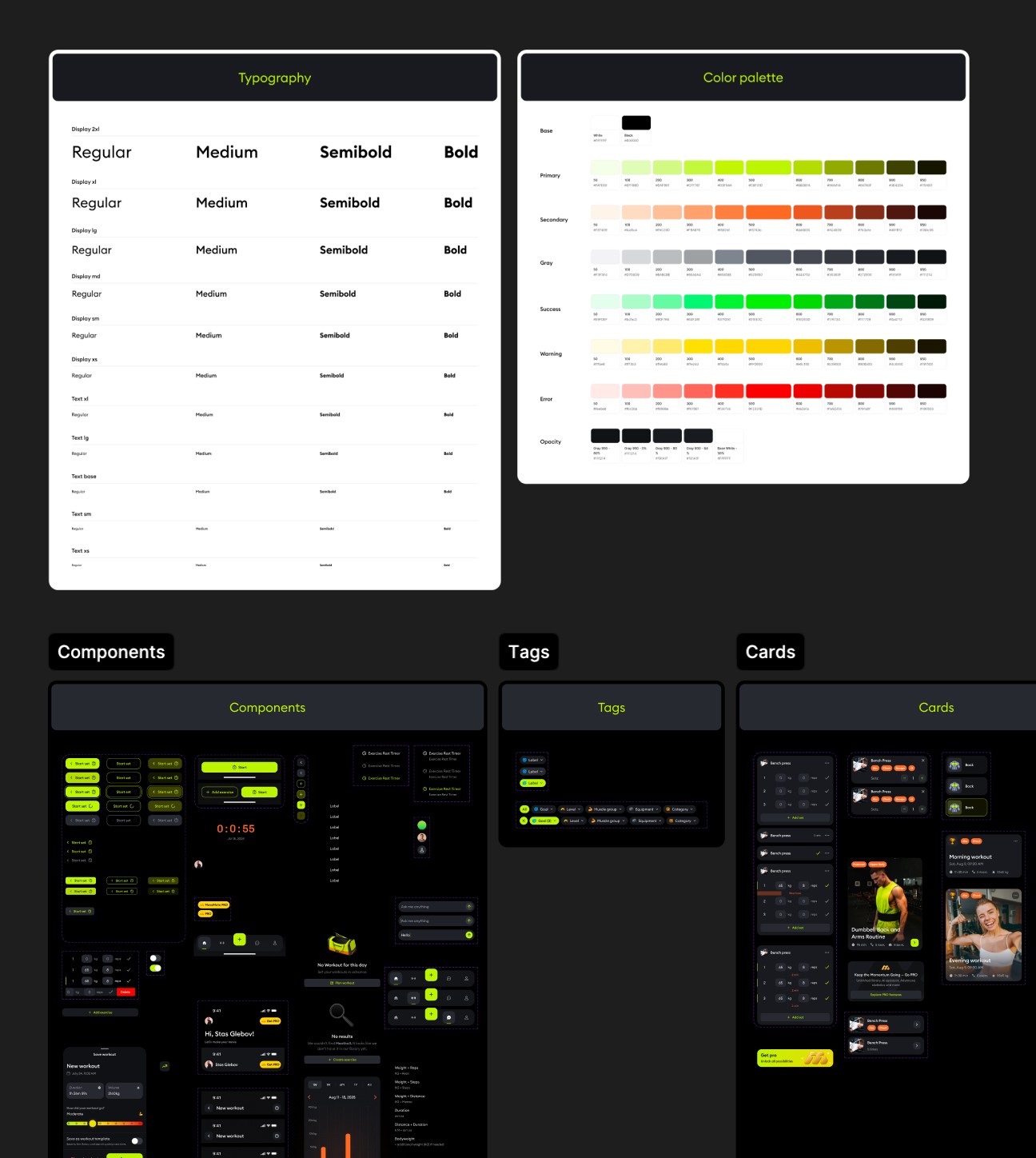
I joined the team in summer 2025. They already had some early drafts of the app, but there was no clear visual system, strong positioning, or solid understanding of the user. So our goal was to build a brand-new design system, define the main goals and feature roadmap, and launch the app by February 2026.
Project goals
Improve the design system and brand positioning
Define key points of differentiation and advantages
Make workout tracker easy and intuitive
Gently guide users from onboarding to subscription purchase

Challenges
The coolest part of this project is that you can use it while designing as a real user. I train regularly in the gym and already know what the training process looks like and how to track workouts. However, I don’t have a personal trainer, and planning proper workouts and tracking progression is such a pain. We saw that users have the same problem — people’s laziness and the desire to have a personal trainer who will guide them through the process with minimal effort but visible results.
There are a lot of boring parts in the workout process. You can ask ChatGPT to generate a workout, but then you still have to manually find and add each exercise in the app. Planning workouts, setting reminders, adjusting plans when life happens, or creating the next program based on previous results all takes time and effort.
The main advantage of this app is that we remove those boring parts. Users don’t need to manually create or plan programs, dig through data to understand their progress, or train without real feedback. The built-in AI supports users at every step — giving feedback, tracking progress, and automatically adjusting training plans based on user input.
Why I should install it
Each user “hires” a product to get a specific job done. We defined a list of core Jobs To Be Done and focused on the most important ones.
“I hire a workout tracker to help me stay on track, follow my workout plan, and measure what I’ve accomplished — without distractions, confusion, or having to remember everything myself.”
🔧 Core Functional Job
When I’m working out, I want to track which exercises I’ve completed, how much time I’ve spent, and how I’m progressing, So I can focus on performing well and see how I’m improving over time.
✨ Emotional Jobs
When I’m training alone, I want to feel like something is guiding and supporting me, So I feel more confident and less distracted.
When I log a full workout, I want to feel accomplished and proud, So I stay motivated to do it again tomorrow.
Building trust during onboarding
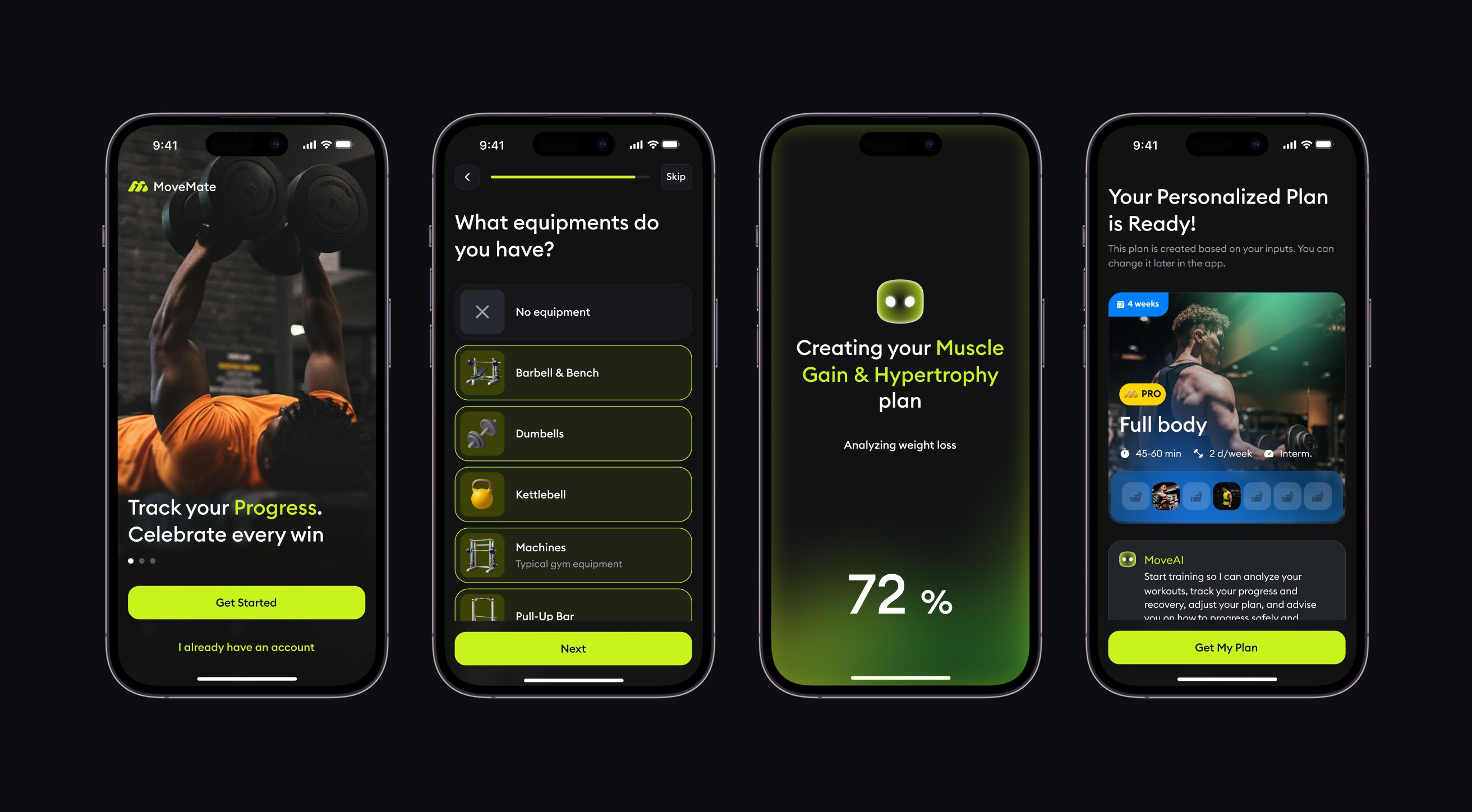
Onboarding is the place where we can gather useful information from users, engage them through a short quiz, and create value by offering a personalized subscription plan. The main user goal is to start using the app right after downloading it, so we kept the quiz short and entertaining. This way, users feel like they’re taking part in something meaningful rather than filling out a long form.
We also didn’t want the quiz to feel like a cold, automated process. Instead, we designed it to feel more like a conversation with a personal trainer — even though it’s powered by AI.
At the end of the quiz, user receives a personalized one-month training program. Access to the full personalized plan requires a PRO subscription. However, we also allow users to skip this step and explore the app using free workout templates.
Exploring Library
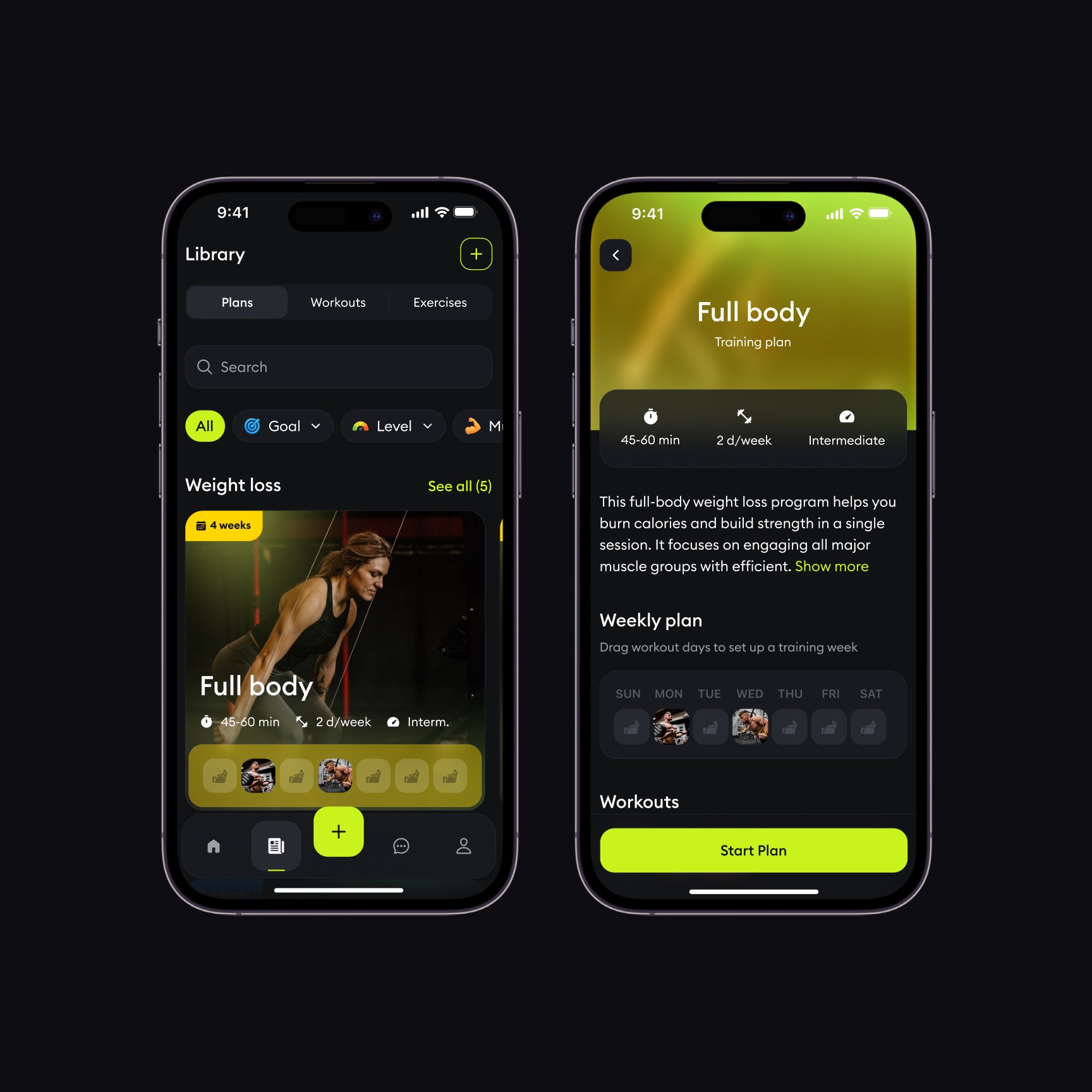
Sometimes working out without a trainer means creating a plan on your own. To make this easier, we built a library of ready-to-start workout plans. Monday isn’t the best day to start? No worries — just drag the workout to another day.
Workout Tracker
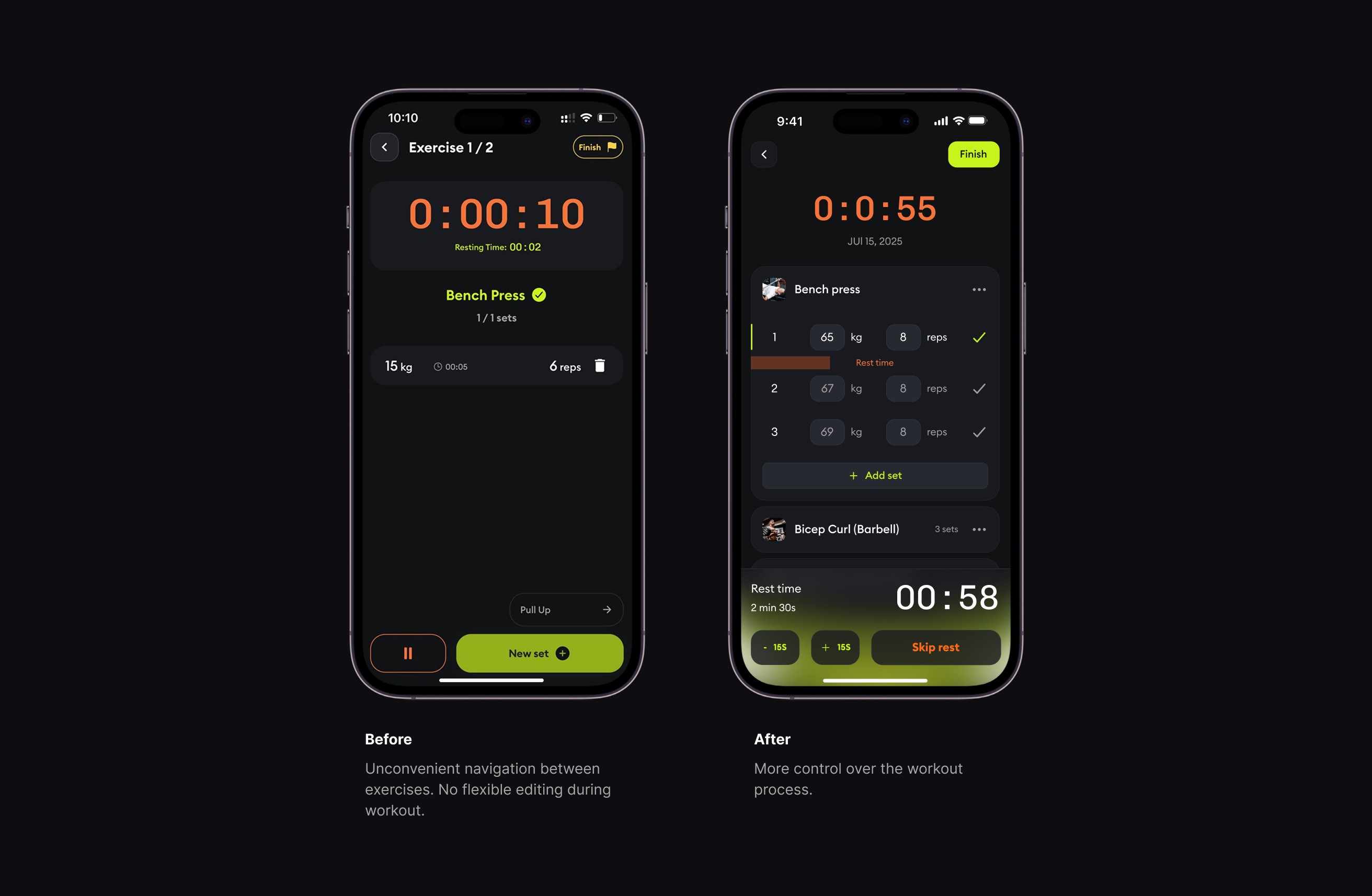
The difference between a beginner and a confident athlete is simple: beginners want guidance, while experienced users want full control over the process. The first version of the workout tracker didn’t make it easy to move between exercises, replace them, change their order, or complete supersets.
In the new version, we gave users more control over their workouts by showing exercises as a list instead of separate pages. Rest time is now more flexible, with additional setup options and notifications that work even when the phone is locked.
Statistics
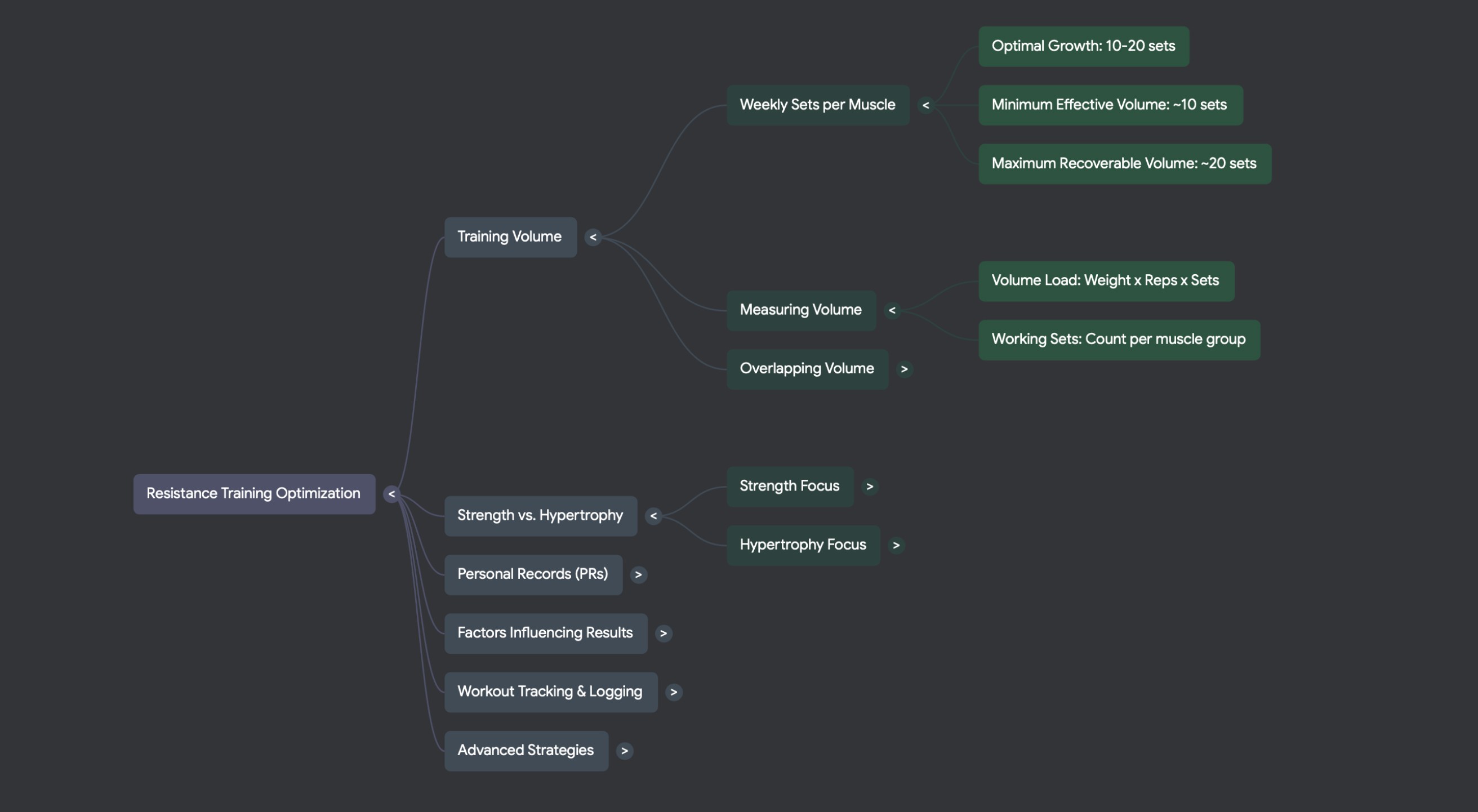
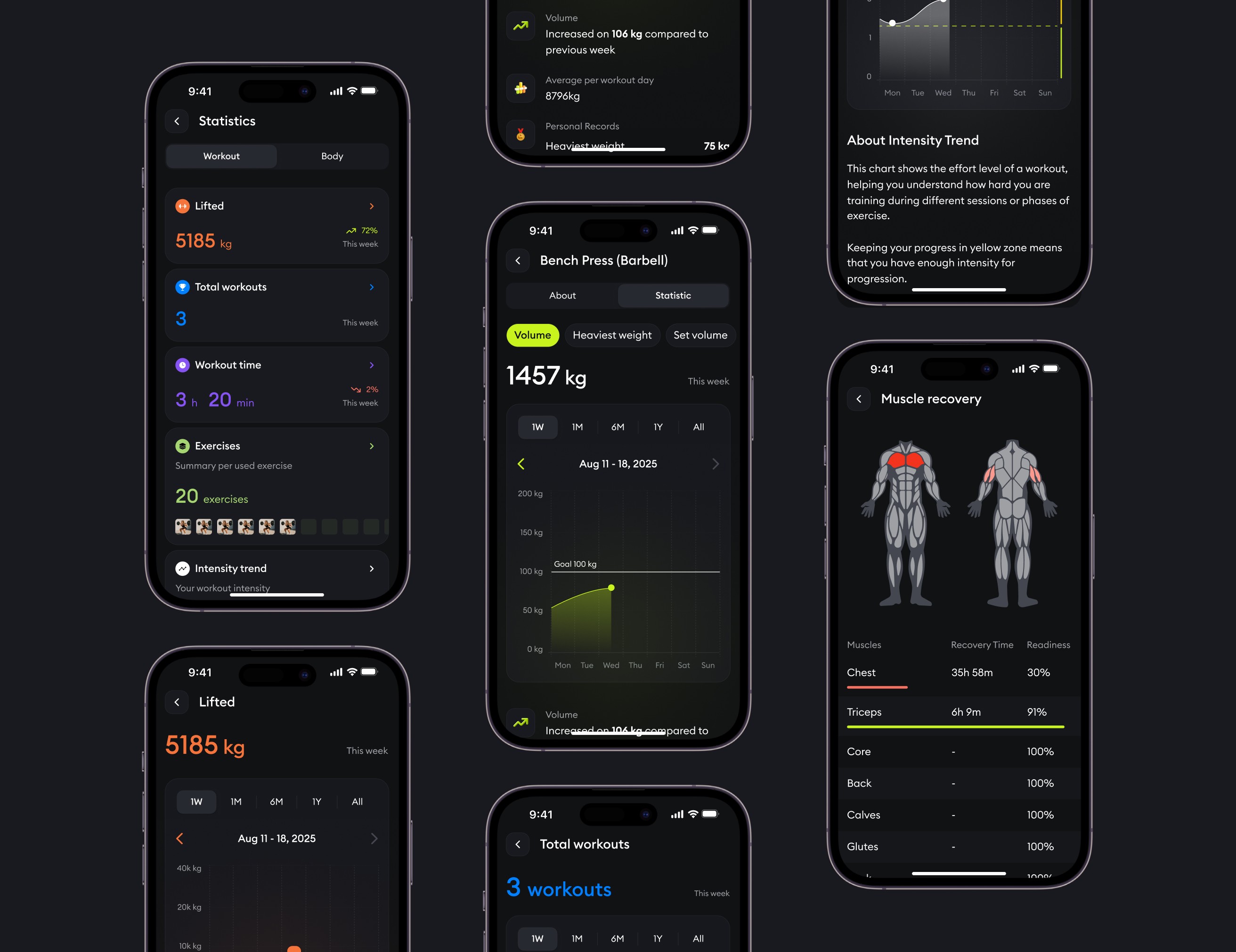
Gym performance tracking is crucial for ensuring, measuring, and optimizing fitness progress. By logging workouts — including weights, reps, and sets — you can apply progressive overload, maintain motivation, ensure consistency, and prevent injuries.
We read dozens of articles to find best practices for measuring workout volume and progress. This research feeds into our integrated AI coach, allowing it to provide professional advice and ongoing support.
In this app, we track and analyze key performance metrics with AI, including: volume per muscle group, muscle recovery, muscle distribution, and individual exercise performance data.
Personal fitness coach: MoveAI
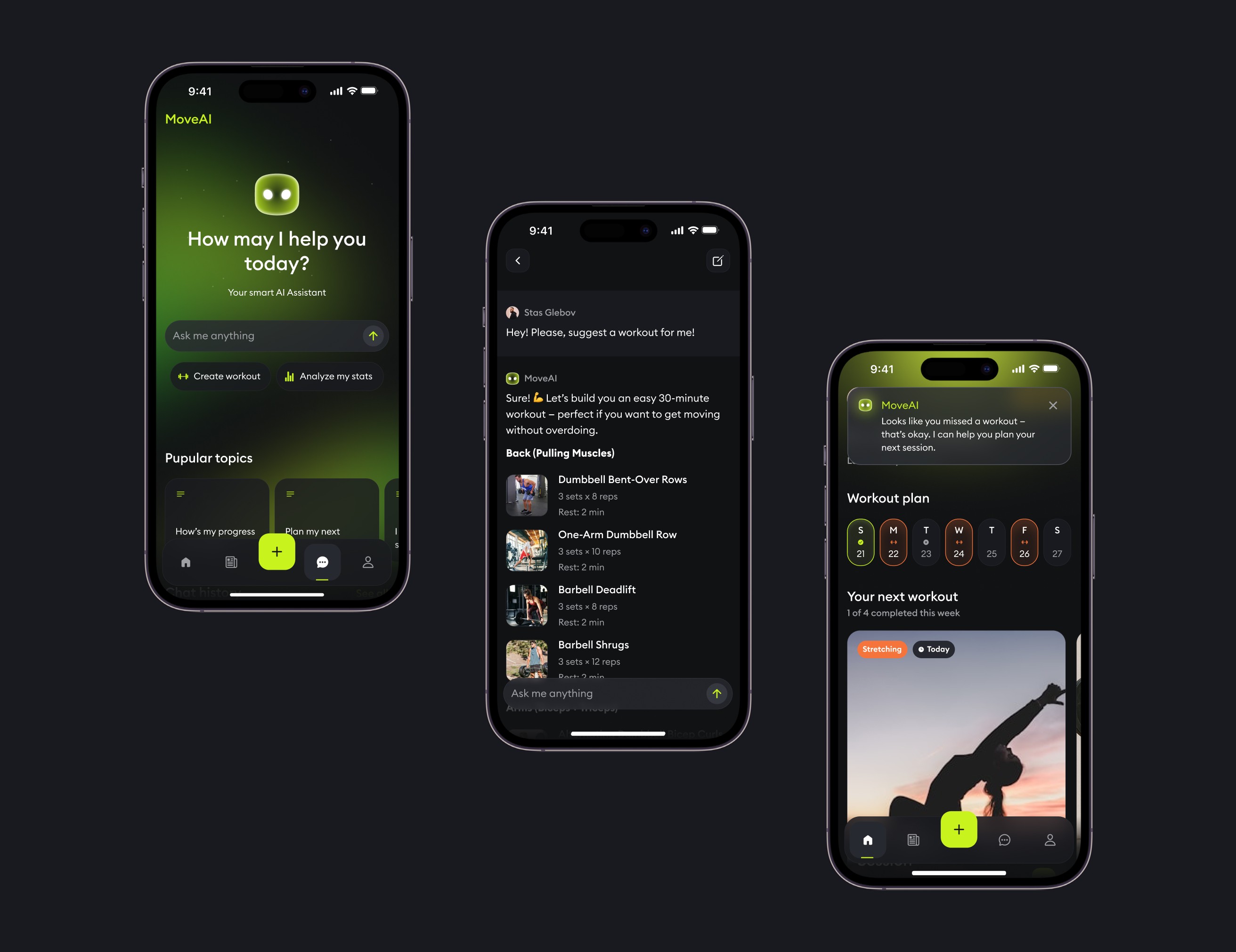
As we found during our research, there are a lot of boring processes that take time, and often users need instant access to expertise in just one click. A good trainer prioritizes personalized, safe, and effective training — focusing on compound movements, proper form, and long-term self-sufficiency. A good trainer is also flexible: you can skip today’s workout, reschedule your program, or analyze your progress to improve your weak points.
Takeways
Users want to start training immediately — onboarding should create value fast, not slow them down.
Making boring manual steps simpler (creating workout plan, planning, analyzing progression) dramatically improves engagement.
Beginners need guidance; advanced users need control — the product must support both.
AI works best as a “personal trainer,” not a cold tool: feedback, flexibility, and context matter.
Personalization and adaptability (rescheduling, changing workouts, progression insights) build long-term trust and retention.
Product designer
© 2026 Vitalii Dudka