Turning OneReach’s web chat into a flexible home for AI agents.
PROJECT #1
2020–2023
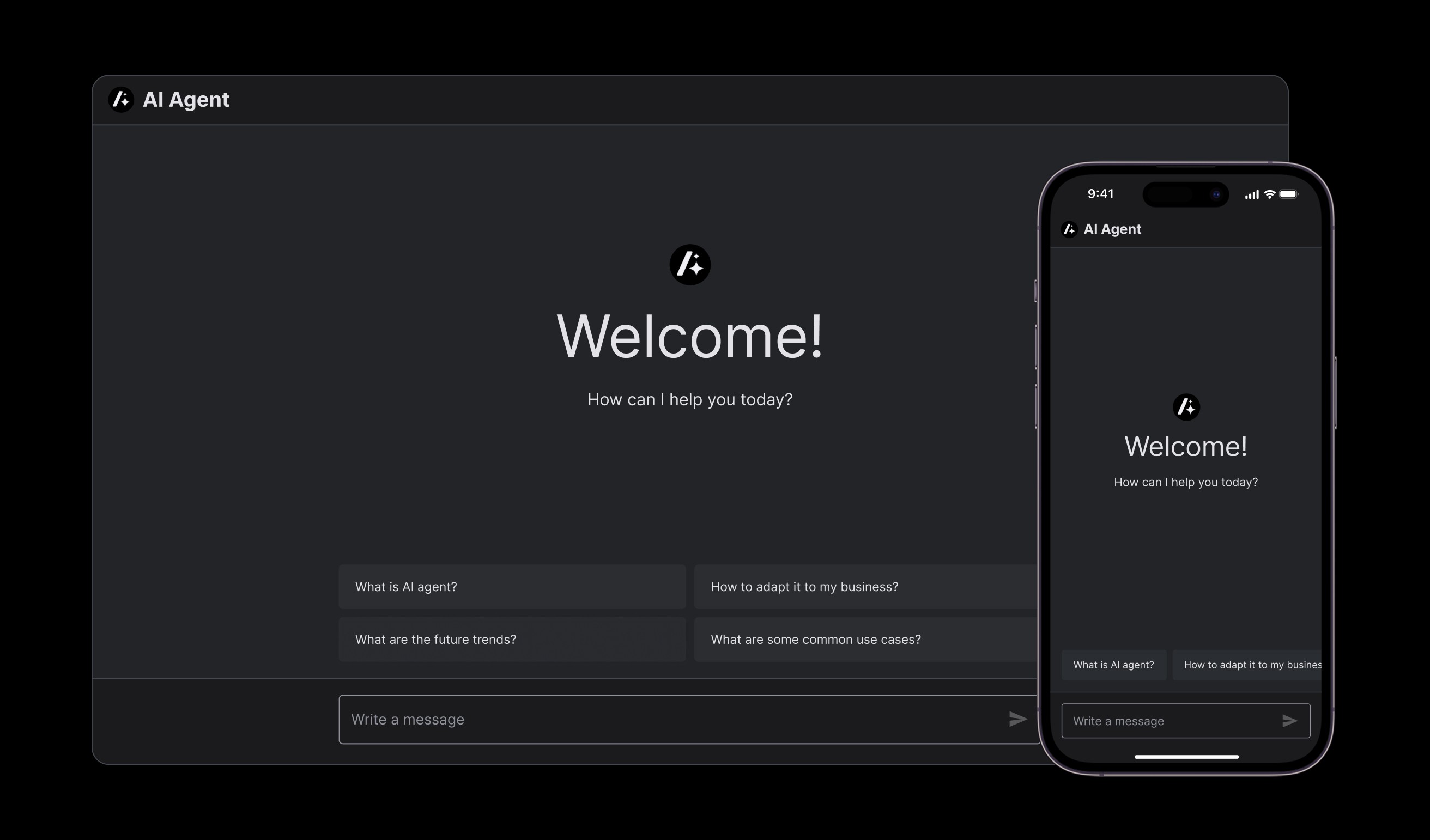
Web chat widget
Role
Sole product designer
Team
3 engineers, 2 QA
Timeline · Platform
2020–2023 · Web, mobile web
Key outcomes
25+ new components
Date pickers, forms, media and more, sent right inside the conversation.
Fewer support tickets
Support and the team saw fewer custom requests once the chat could cover more cases.
A product for 1M+ customers
One client built and launched their own product on top of our chat, for a business with over a million customers.
Context
Why this mattered
When I joined, Rich Web Chat looked and worked like a classic chatbot. It answered questions with ready-made templates.
But OneReach was moving to AI agents. An agent doesn’t just quote a help article. It books the appointment, fills the form, finishes the task. For that, the chat needed much more than text bubbles: date pickers, checkboxes, forms and media, sent in the middle of a conversation.
Our solution builders also needed to shape the chat for each client: their brand, their layout, their use case. The design was too rigid for all of that.
And there was another problem. Engineers had their own component library, and designers worked from a separate UI kit in Sketch. The two never matched, so every new screen meant extra work on both sides.
Part 1
A chat that fits every client
I started with what clients were asking for right now. I designed 25+ new components for the chat and added basic layout options.
It helped, but it was slow. Our Sketch files were old, and keeping every component up to date by hand took more time than designing new ones.
The real change came when we moved to Figma and a shared design system with tokens. I helped build it: I designed and documented 10+ components, like date, time, date range and date-time range pickers, and kept them consistent across our services.
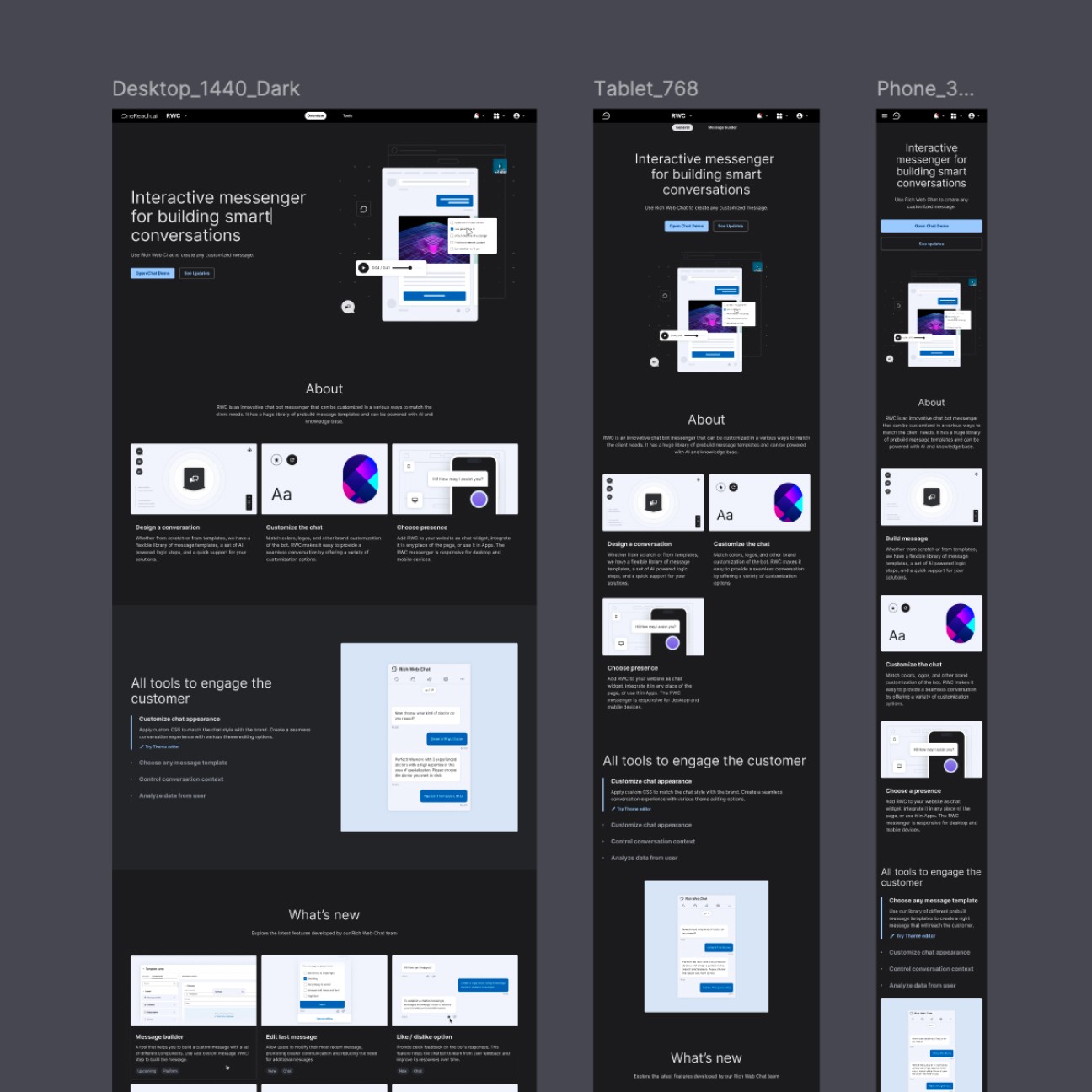
With that in place, I redesigned the chat itself:
Light and dark modes.
A customization tool, so our solution builders could match the chat’s colors to each client’s brand, without asking design for a new version.
I also designed the Rich Web Chat landing page and wrote its content.
Part 2
From chatbot to AI agent
When large language models arrived, three signals came at the same time. The company owners asked for a chat that feels like AI. Competitor research showed others were already moving that way. And some clients told us our widget looked like “a standard, annoying chatbot form.”
So instead of copying messenger habits, I changed how the chat explains itself:
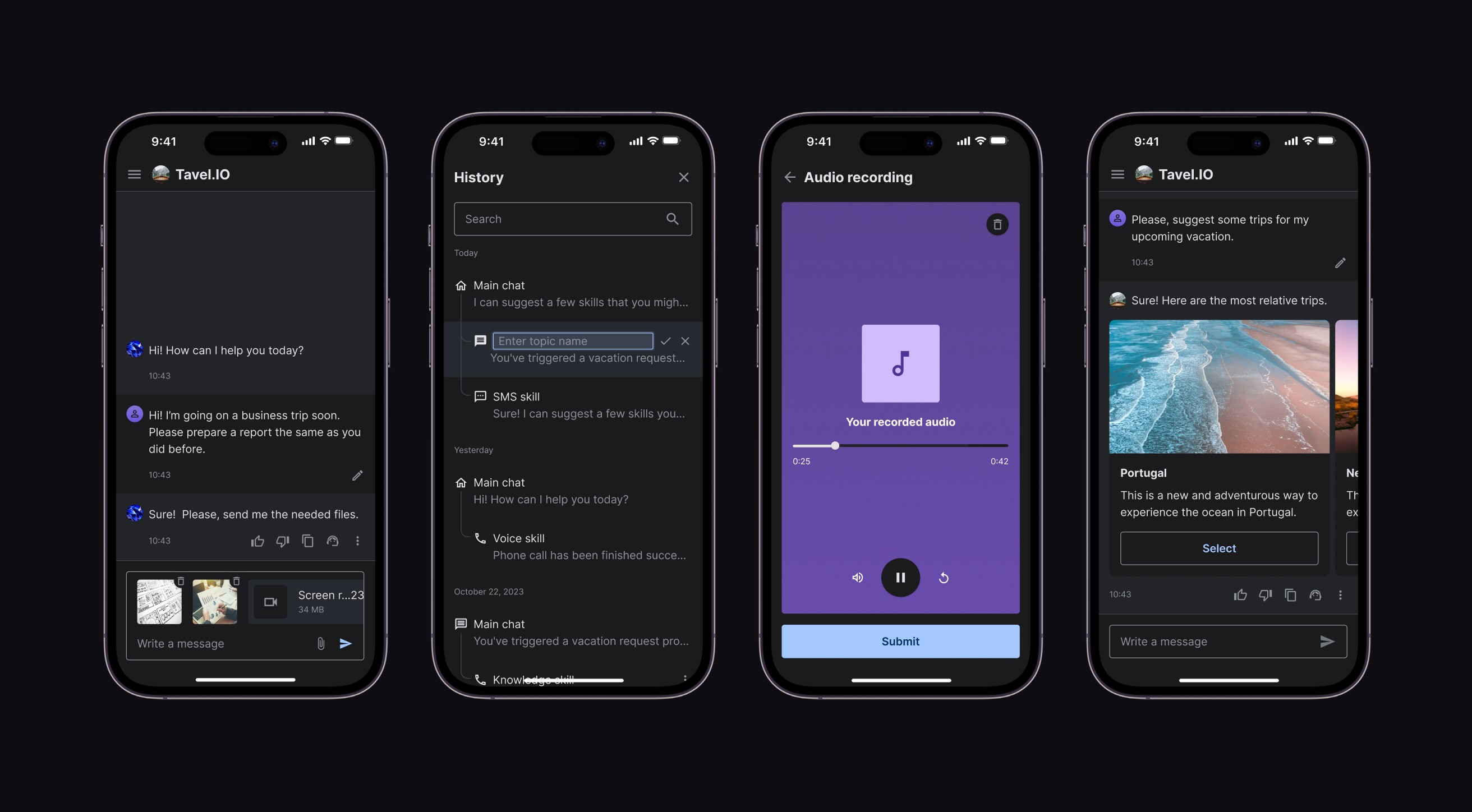
Show that the AI is thinking. Loading states and soft animations tell users the agent is working, so a pause doesn’t feel like a bug.
Make room for rich answers. I redesigned the layout so forms, files, audio and cards fit naturally into the conversation.
One assistant across our tools. I adapted the chat so it could also work as an AI assistant inside OneReach’s own products.
Impact
What changed
With 25+ components and the customization tool, most client needs were covered out of the box. Solution builders built more solutions with custom business logic, and built them faster.
Fewer custom requests in our ticket system, according to the team and customer support.
One client launched their own product on top of our chat, serving a business with over 1,000,000 customers.
Today businesses run their processes and automations on the chat, from customer support widgets to internal tools with voice.
Reflection
What I learned
01
A design system buys you time to think
Before Figma and tokens, most of my time went into keeping files in sync. After, I could spend it on real product problems. Engineers moved faster too, and every screen finally looked like one product.
02
Design for what the AI is doing, not for what people are used to
Copying a messenger felt safe, but it hid what the agent was actually doing. When the chat started showing that the AI was thinking, a pause stopped looking like a bug.
This was my first project at OneReach, and I was the only designer on it. It taught me how to own a product from the first component to the last release. After a while, I wanted a bigger challenge, so I moved to the AI Agent Builder, where I grew into a senior role.
Product designer
© 2026 Vitalii Dudka